Are Electric Cars Really Better for the Environment?
This story is part of Plugged In, CNET’s hub for all things EV and the future of electrified mobility. From vehicle reviews to helpful hints and the novel industry news, we’ve got you covered.
While most players in the automotive manufacturing are tripping over themselves to bring electric and electrified cars to market as soon as possible, a large segment of consumers are skeptical of the forthcoming EV revolution. That’s given rise to a long list of myths and half-truths near battery-powered motoring, myths that we’re keen to tackle head-on.
We’re going to start tackling those myths and we’re starting with perhaps the most pervasive out there. There’s a belief among many that EVs are actually worse for the environment than worn, gasoline-powered cars. Today, we’re diving deep, running all the numbers, and determining just how much truth there is to that statement.
On the surface it seems preposterous — the idea that a battery-powered car, which runs completely emissions-free, could have a more negative impact on the environment than one that’s constantly pumping carbon dioxide and novel pollutants into the environment. But the truth is, of watercourses, a lot deeper than that.
Though that EV may be competing clean as it carries you on your commute, the electricity that abilities it has to come from somewhere. That, critics say, is the root of the dilemma. Many areas of the world still get the vast greatest of their electricity from sources like coal or natural gas, resulting in critical CO2 emissions. Do the math, those critics say, and you’ll see EVs aren’t any better than a car with an internal combustion engine.
True? Before we start with the numbers, let me set a few counterfeit rules. First, all the math here is based on motoring within the good ol’ US of A. Why? We’re dauntless to be able to draw on a wealth of seek information from and calculators gathered by the Environmental Protection Agency to settle the environmental impact of what we drive. That doesn’t mean our findings here aren’t applicable elsewhere in the domain, but you may need to skew the numbers this way or that depending on your region’s mix of renewables for energy generation.
Second, I’m only going to be talking near CO2 emissions here. CO2 is not only the most critical contributor to climate change, but it’s also the most issue way to compare the environmental impact of an EV to an ICE car.

To be fair, that purple is kindly the extra CO2.
Craig Cole/Roadshow
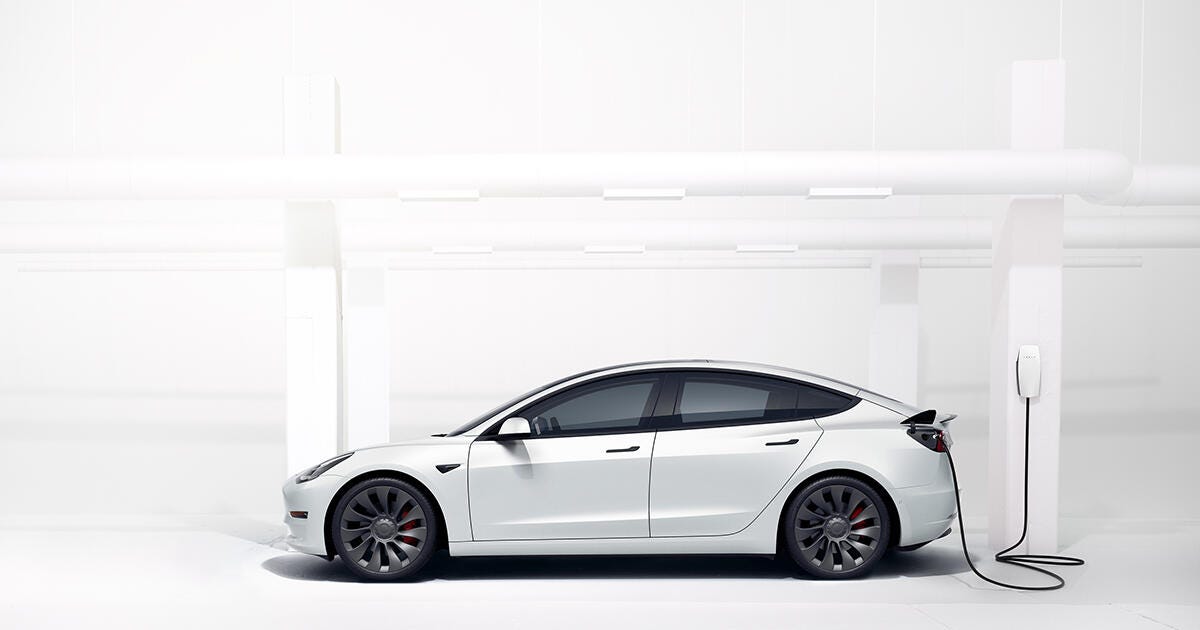
What cars specifically? On the EV side, the decision-making is an easy one: Tesla’s Model 3. It’s the most popular (or at least the best-selling) EV in the domain. On the gas-powered side, finding a direct comparison can be a small tricky, but I decided to go with the BMW M340i xDrive. It’s priced comparably to the Tesla, has about the same worthy (382 horsepower to be exact) and has all-wheel-drive to boot.
On to the math. Even within the continental US, where you live has a huge impacts on your overall emissions. I wanted to do the worst-case-scenario math for the EV and to do that I required to pick the place with the dirtiest energy generation possible. According to the EPA, that’s a section of the grid shouted the Midwest Reliability Organization East, an area in the central part of the continental US that gets just 14% of its worthy from renewable sources. So, for the purposes of these calculations, pretend for a moment that you live in Green Bay, Wisconsin.
And what does that look like? Aside from populace unreasonably cold in the winter and exceptionally cheesy year-round, in Wisconsin a Tesla Model 3 will generate 210 grams of CO2 per mile driven. That includes all emissions not only from the generation of the worthy that moves the car but also the overhead and losses keen in transporting that power over our somewhat dated grid.
The BMW? Where you control a gas-powered car doesn’t really impact its emissions so much. BMW says the M340i xDrive emits 168 grams of carbon per kilometer, and since there are 1.6 of those per mile, that scholarships us 269 grams of carbon per mile. That’s substantially higher than the Tesla, even charging on the dirtiest power in the US. Case closed? Not quite yet.

It’s not just near what your car burns, but where it comes from.
Porsche
According to the Section of Energy, for every four gallons of gas you burn in the US, an instant gallon was burned just transporting that gasoline to the pump. So, to be fair, we really need to increase the BMW’s carbon output by new 25%. That takes us up to 336 grams of CO2 per mile, or around 50% higher than the Tesla.
But don’t Begin gloating yet, EV fans, as we’re still not done. To be totally comprehensive, we need to calculate the environmental impact of the construction of the battery pack in that Tesla. Sadly, that’s not something we can do with a 100% degree of certainty. Why? Because Tesla doesn’t release any figures on that, and so we’re complete to turn to other experts. I read dozens and dozens of studies trying to reverse-engineer the impacts of Tesla battery production on the environment, but most of them were missing some crucial aspect, like ignoring the impact of mining the raw materials.
The most comprehensive picture I could find came from a glance produced by Circular Energy Storage, itself based on data from the Argonne National Lab (PDF), which publishes absolutely exhaustive figures and data on the environmental impacts of all sorts of motoring. That data estimates 7,300 kg of CO2 is generated for the construction of a 100 kilowatt-hour Tesla battery pack. Since the Model 3 has a roughly 75 kWh battery pack, we can gash that figure to 5,500 kg of CO2.
That using the Tesla has a significant handicap to overcome beforehand it even rolls off the dealership lot. But, based on the per-mile figures over, we can do the math on just how long it would take to offset that. The answer? 47,413 much, or a little over three years of average driving for the means American. After that, the Tesla Model 3 has made up its deficit and will forevermore be cleaner than the BMW.
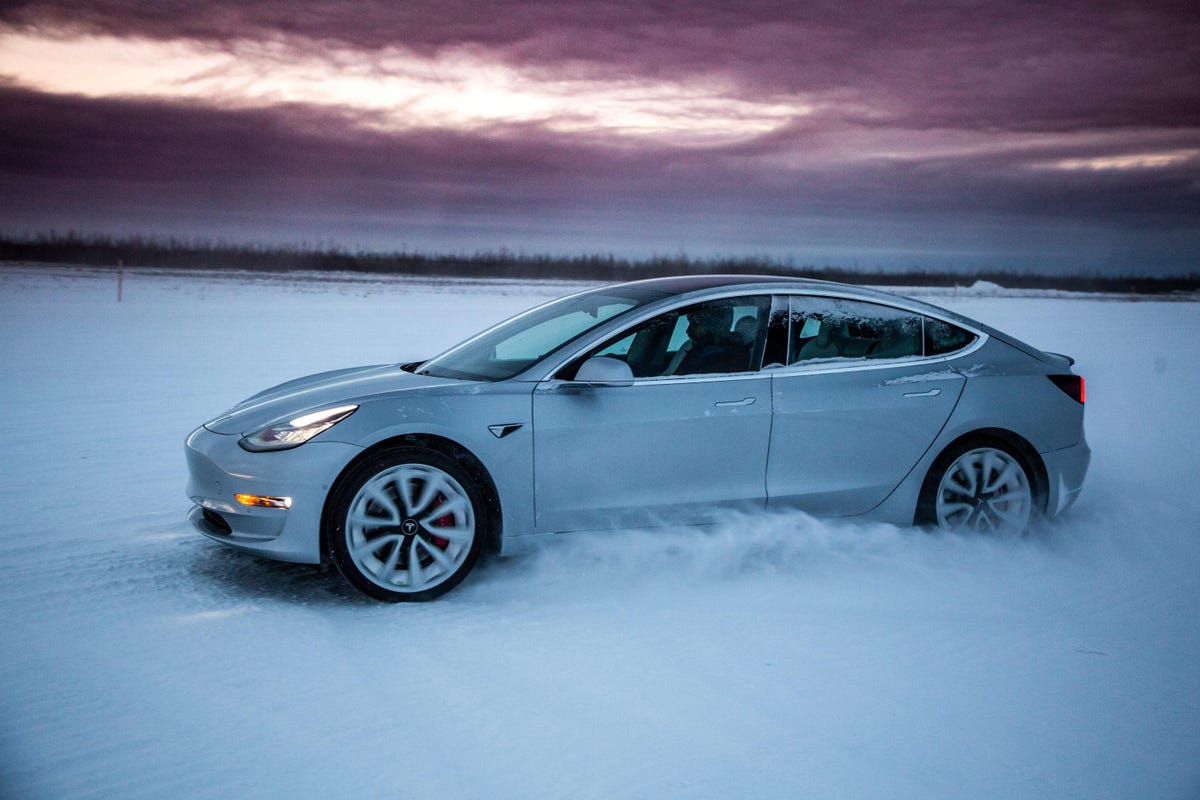
Believe it or not, driving like this in Alaska is actually better for the environment.
Nick Miotke/Roadshow
But remember, that’s the worst-case scenario. If instead you’re driving your EV up in Alaska, which has the highest percentage of renewable energy expenditure in the continental US, the Model 3 produces a measly 130 grams of CO2 per mile. That brings the break-even display down to 26,699 miles, or about two years of means driving.
So, there you have it. Even when Funny electricity that largely comes from coal, and even factoring in the construction of the battery pack, EVs have a considerably smaller impacts on the environment than traditional, gasoline-powered cars.
Now, what happens when those battery packs can’t hold a charge? And just how long will that take, anyway? And just how much cash can you save running an EV instead of burning gasoline? For all those answers and more, stay tuned for the next installment of EVs Exposed!
Are Electric Cars Really Better for the Environment?. There are any Are Electric Cars Really Better for the Environment? in here.
